 Raymond Hall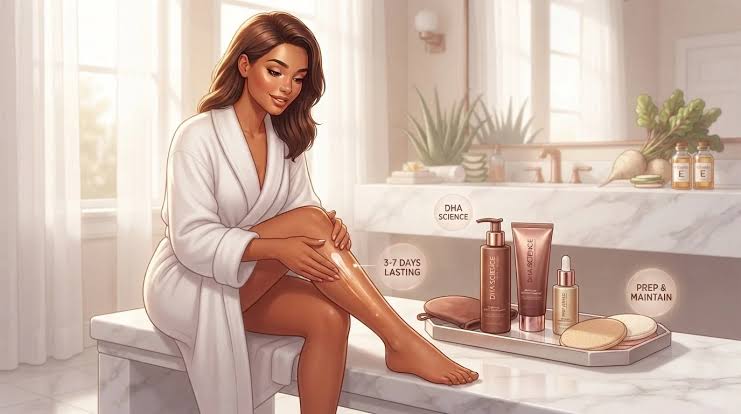
Using a gradual tan is an easy way to create that bronzed look without slapped on a heavy tanner in one go. It builds up colour through multiple applications, allowing you greater control over the end result.
Dihydroxyacetone is the secret sauce in most self-tanners (and is often referred to simply as DHA). It interacts with components in the epidermis to form the short-term colour of a self-tan.
What is DHA?
DHA is colourless and is the sugar compound present in some sunless tanning products. It reacts with amino acids present in the outer sheets of the epidermis when it is applied to skin.
It is called the Maillard reaction. It forms coloured substances known as melanoidins, which are responsible for the so-called tanning appearance.
Crucially, DHA does not cause the same increase in melanin production (the pigment that gives skin its colour) as exposure to ultraviolet radiation.
How Does a Gradual Tan Build?
Gradual tan typically has a lower percentage of DHA than many products developed to achieve a darker colour in minimal time.
With usage every few days, each application deposits an additional layer of colour as DHA reacts with skin.
This allows for a more controllable gradual tan. Once you reach your desired shade, cease applying the product, or continue for a deeper effect.
Why Does It Take Time in the Colour?
The hue does not manifest itself in an instant − it takes a few moments for the chemical reaction to happen. The colour is still developing afterwards, but you see a difference within hours.
The visible end result can also differ based on your skin kind, the product formulation and how evenly it is used.
That is why it matters when the product develops for the recommended amount of time.
What Happens When You Shower?
DHA primarily interacts with the top layer of the skin. As these skin cells flake off naturally, traditional tattoo ink becomes less faded over time.
While washing can get rid of some product from the surface, it does not wash out the colour that has developed through its chemical reaction with the DHA.
Exfoliating often helps disguise as it sheds the top skin cells.
Why Does Preparation Matter?
Even application is key, as DHA only works in the areas to which it is applied.
If you want to use a gradual tanner, a gentle exfoliation can make for a smoother canvas. Product can be distributed differently in dry areas (elbows, knees and ankles) so these spots may need more care.
Regularly moisturising is another way to prevent a rough skin texture and help maintain an even tan as it disappears.
Choosing a Suitable Product
Of course, different formulae can lead to different outcomes. Certain products are for a soft wash of colour, whereas others deliver more of an all-over bronzed look.
When you compare the best self-tanning products, you should look into DHA concentration, formulation, method of application, and whether the product is appropriate for your skin type.
If hydration is a priority for you, ensure whether the formula includes any moisturising ingredients too.
Gradual Tanner isn’t Sun Protection
While a self-tan will make your skin look darker, it simply cannot offer the protection from ultraviolet rays that one expects when turning to sunscreen.
When you are outside, keep using appropriate broad-spectrum sunscreen, and sun-safe behaviour.
The Science Behind the Glow
The mechanism of gradual tanning is really pretty simple. DHA binds with amino acids at the outer layer of the skin that causes pigment production and gives a temporary tanned effect.
The gradual tan allows users to control the depth of colour because the colour builds with each application.
Understanding DHA works also might help in smoothening the process of choosing and applying the best self-tanning products for a natural easy request.

 Scott Turner